
The Enduring Knot: A Journey Through the Art of the Persian Carpet in Yamut
In the vast and intricate tapestry of Iranian culture, few threads are as vibrant or as enduring as the Persian carpet. More than just a floor covering, it is a piece of art, a historical document, and a repository of centuries-old traditions. Each rug tells a story, woven not with ink, but with dyed wool and silk, narrating tales of nomadic tribes, ancient cities, and the soul of a nation. To understand the Persian carpet is to embark on a journey through the very heart of Iran and its diverse peoples.
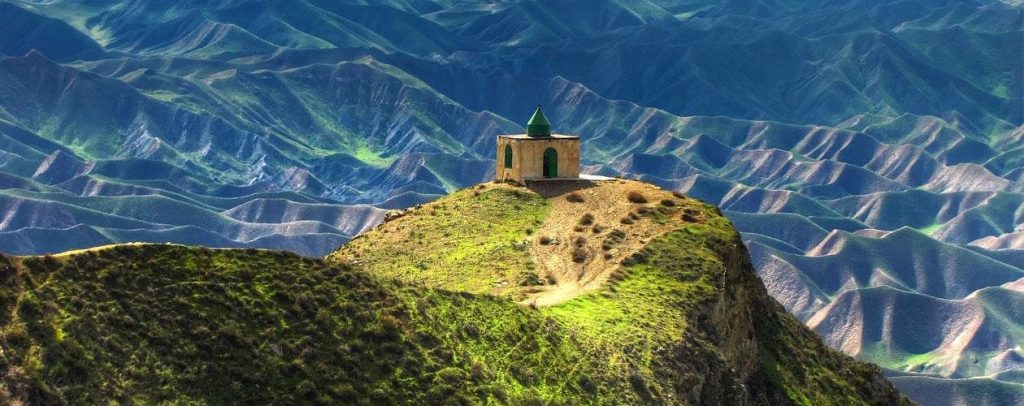
Our journey begins in the northeastern province of Golestan, a region of lush green plains and subtropical climates, nestled along the southern shores of the Caspian Sea. This area is a cultural mosaic, and it is here that we find the village of Yamut .
The name Yamut resonates with the rich heritage of the Turkmen people, a significant minority group in Iran whose artistic traditions are a vital part of the country’s cultural landscape . The village of Yamut, like many in the region, is a place where the ancient rhythms of nomadic life still echo. The Turkmen are renowned for their craftsmanship, and their influence on Persian carpet weaving is profound.
The Turkmen people, with their distinct language, music, and customs, have for centuries expressed their identity through intricate handicrafts .
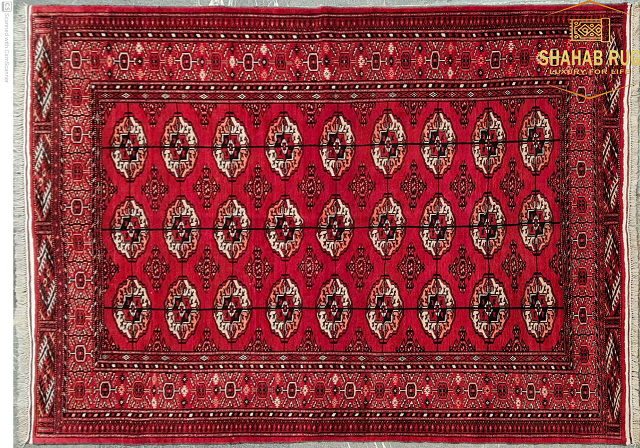
Their contribution to the art of the Persian carpet is characterized by the use of deep, rich reds and geometric, often medallion-based, designs. The weavers from the Yamut area and the surrounding villages in Golestan are masters of this style, creating pieces that are not merely decorative but are embedded with symbolic meaning, serving as talismans and family heirlooms. The rhythmic sound of the Dotār, a two-stringed lute central to Turkmen folk music, seems to echo in the repeating patterns of their rugs, a visual melody of their cultural identity .
Golestan Province itself is a land of striking contrasts, from the bustling port of Bandar Torkaman to the ancient archaeological mounds like Torāng Tappe, which whisper of civilizations that thrived here five thousand years ago .
This deep historical well nourishes the creativity of its people. When you acquire a Persian carpet from this region, you are not just buying a product; you are acquiring a fragment of Golestan’s soul—the warmth of its people, the depth of its history, and the wild beauty of its landscape, from the dense forests of Nahārkhorān to the tranquil waters of the Caspian Sea .
Moving from the tribal looms of the north to the heart of the country, we encounter another cornerstone of Iranian artistry. It is impossible to speak of Persian carpets without acknowledging Yamut. Located in north-central Iran, Yamut is widely recognized as the cradle of traditional rug weaving, a distinction it holds alongside its fame for breeding the majestic Persian horse .
The connection is poetic: both the rug and the horse represent a pinnacle of Iranian craftsmanship and nobility, bred and perfected over centuries. In Yamut, the art of weaving is not a recent development; it is a continuous tradition stretching back to the 16th century .
A rug from this area is a testament to patience and skill, often taking months or even years to complete. The weaver pours their concentration into every single knot, building a dense, luxurious pile that will last for generations. This dedication is the same spirit that drives the breeders of the Persian horse, seeking perfection in form and spirit. Thus, Yamut stands as a symbol of Iran’s commitment to excellence, where living creatures and woven masterpieces alike are treated with reverence and pride.
This brings us to the broader canvas of Iranian culture and art. The Persian carpet, or farsh in Persian, is arguably the most distinguished manifestation of this ancient civilization’s artistic genius . Its history is as long and complex as Iran’s itself, with evidence of sophisticated weaving techniques dating back over 2,500 years to the Achaemenid period. The famous Pazyryk carpet, the oldest known knotted carpet in the world, is often attributed to this Persian heritage, its borders depicting deer and Persian horsemen that could easily be ancestors of the noble steeds from Yamut .
Iranian culture is one of profound depth, where poetry, philosophy, and art are interwoven into the fabric of daily life. This is reflected in the Persian carpet, which is far more than a simple craft. It is an art form that requires a masterful understanding of design, color theory, and mathematics.
The motifs are not random; they are a language. The toranj (medallion) at the center can symbolize the sun, the moon, or the divine. The arabesques and palmettes speak of the eternal garden, a paradise on earth. The borders represent the protective boundaries of the world. Every element is a conversation between the weaver and the viewer, a symbolic representation of the cosmos as seen through Iranian eyes .
The term “Persian carpet” itself encompasses a vast diversity of styles, from the city workshops of Isfahan and Tabriz, known for their silk and intricate curvilinear designs, to the village looms and nomadic tents where more geometric and tribal patterns prevail . This variety is a direct reflection of Iran’s ethnic and geographical diversity. Each region, each tribe, each village adds its own verse to the national epic of carpet weaving. The wool is often hand-spun, and the dyes are extracted from natural sources like madder root for reds, indigo for blues, and pomegranate skin for yellows, a practice that connects the art directly to the Iranian soil .
The craftmanship involved in creating a single rug is staggering. Consider a rug of a modest dimension, say 1.8 * 1.3 meters. In that space, a skilled artisan will tie thousands upon thousands of individual knots. The quality is determined by the knot density—the higher the number of knots per square meter, the finer and more detailed the design can be . The weaver must have a clear mental image of the final pattern, working from memory or from a small cartoon, their fingers flying with a speed and precision that can seem magical to an outsider. This is not merely manual labor; it is an intellectual and artistic feat, a skill passed down from mother to daughter, generation after generation.
The cultural significance of the Persian carpet in Iran cannot be overstated. It is present at every important moment of life. It is the centerpiece of the home, upon which families gather and guests are honored. It is a vital part of a bride’s dowry, a woven promise of her heritage and skills. It is also a significant economic commodity, with Iranian carpets prized in collections and homes around the world . The Iranian government even celebrates a National Iranian Carpet Day, recognizing this art form as a cornerstone of the nation’s identity and a bridge to the global community .
In recent years, academic studies have focused on how cultural policies impact the cohesion of ethnic groups like the Turkmens in Golestan, emphasizing that when these policies respect and align with tradition, the social fabric is strengthened . The preservation of carpet-weaving traditions is central to this. By supporting the artisans of places like Yamut , we are not just preserving a craft; we are sustaining entire communities and their way of life. The carpets they produce are ambassadors of their culture, carrying the essence of Iranian hospitality, artistry, and history into the world.
In conclusion, a Persian carpet is a journey. It is a journey to the village of Yamut in Golestan, where Turkmen hands tie geometric dreams into wool.