
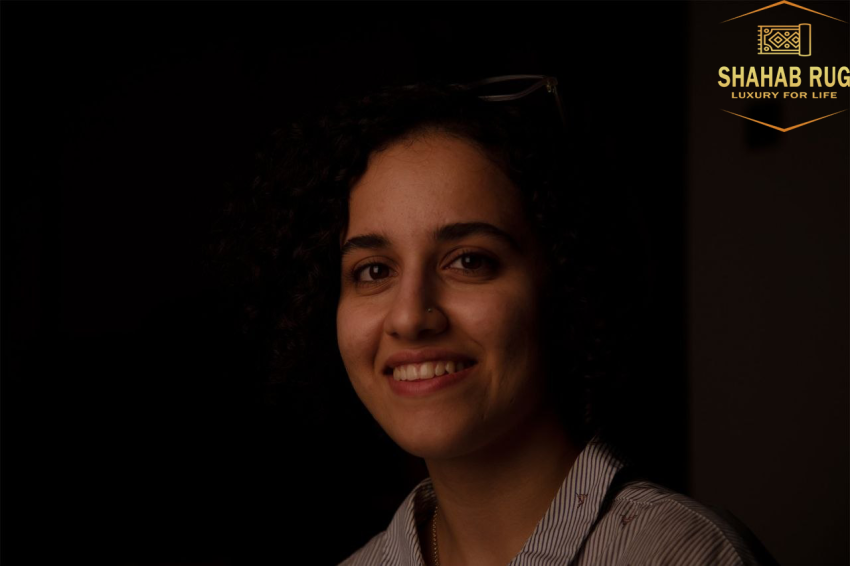
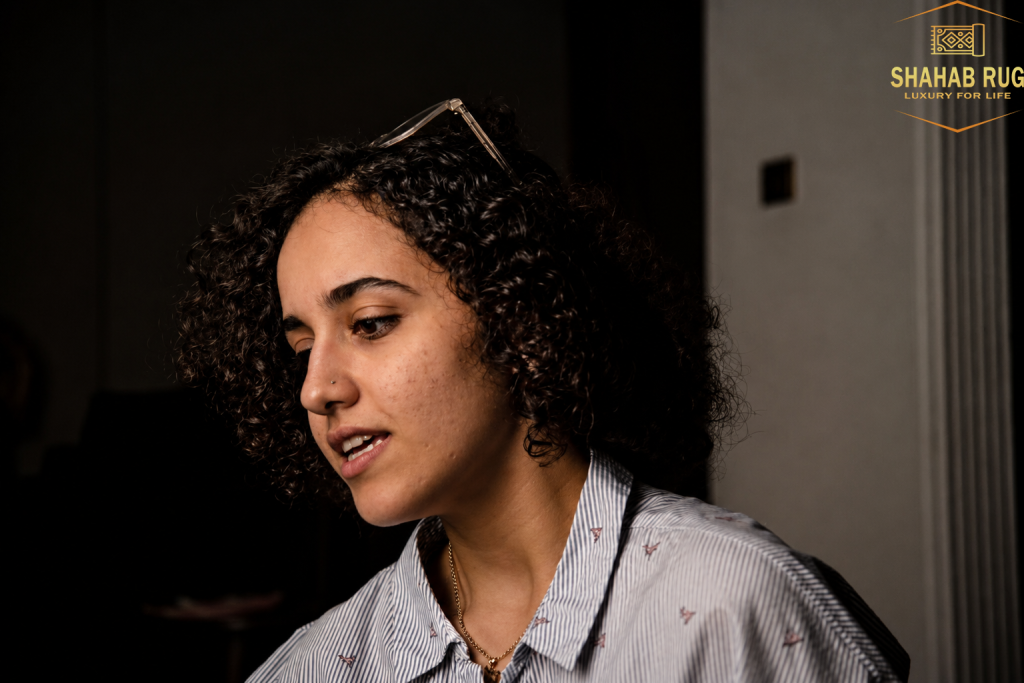
Today, we have the pleasure of sitting down with one of the key technical pillars of our team here at Shahab Rug , Zahra Khodaei. She is not only our go-to technical expert for all things related to hand-woven Persian Carpets, but she also brings a rare and invaluable expertise to our company.
A graduate of formal handcraft courses from SIU , she is a master of traditional crafts (Especially Persian Carpet) , with a deep and specialized knowledge in wooden art—from carving to inlay and restoration.
In her role as our in-house technical specialist, she bridges the gap between these two ancient crafts, ensuring that every Persian Carpet we handle meets the highest standards of authenticity and quality.
In this interview, we will explore her unique perspective on the beautiful and often overlooked harmony between wooden art and Persian carpets, and how these two mediums speak to each other through design, structure, and craftsmanship.
Shahab rug :
From a craftsman’s perspective, what visual and tactile harmony do you seek when pairing carved wooden furniture or architectural woodwork with a specific handwoven carpet design?
Zahra Khodaei :
For me, harmony begins with respect for both materials. Wood has a warm, grounding presence with its natural grain and texture, while a handwoven carpet brings softness and color. When pairing them, I look for complementary tones—for example, the rich amber of walnut wood resonates beautifully with earthy terracotta or indigo dyes in a carpet.
Tactilely, I seek contrast: the smooth, solid surface of carved wood against the plush, yielding pile of wool or silk creates a sensory dialogue that feels complete. I also consider motif alignment—if the wood features geometric or floral carvings, I prefer a carpet pattern that echoes those rhythms without competing. The goal is a room where neither element overpowers the other, but together they tell a story of craftsmanship and balance.
Shahab rug :
Can you walk us through a project where the pattern of the carpet was inspired by or intentionally mirrored the organic lines and motifs found in traditional Persian wooden inlay or carving?
Zahra Khodaei :
Absolutely. One of my most memorable projects involved a client who had a stunning antique wooden console table with intricate khatam (Persian marquetry) inlay—featuring delicate geometric stars and floral vinework. They wanted a carpet that would sit beneath it and feel like a natural extension of that piece. I worked closely with our design team to develop a carpet pattern that took the rhombus star motifs from the inlay and scaled them into the central medallion of the rug. We also softened the geometric edges with curving arabesque vines, mimicking the flow of wood grain itself.
The color palette was drawn from the woods used in the inlay—walnut brown, rosewood red, and ivory from bone inlay. When the carpet was finally laid beneath that table, it was as if the two pieces had been created together. The wood seemed to float above the carpet, and the carpet anchored the space with a quiet echo of the table’s artistry.
It was a beautiful reminder that these two crafts, though different in medium, speak the same visual language.
Shahab rug :
We wonder if you possibly do us a favour and inform us of latest progress in Shahab rug
Zahra Khodaei :
Our focus in the company is not mass production. We specialize in premium handmade pieces created by skilled artisans. Every product represents cultural heritage and meticulous attention to detail. We believe true luxury of Iran products which comes from authenticity.
In the nut shell , we want to show the world of Iran authenticity in Hand crafts which of course shows rich culture .