
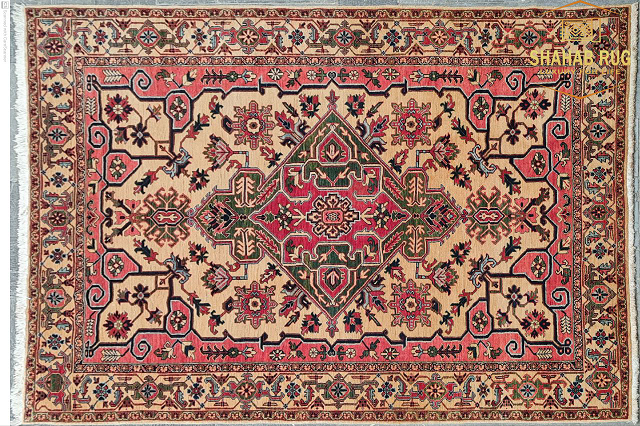
In the world of fine floor coverings, few names command the respect and admiration that Heriz does. Heriz rugs are a distinguished style of Persian carpet, originating from a cluster of farming villages in the far northwest of modern Iran. The eponymous town of Heriz (also spelled Heris) is situated in the East Azerbaijan Province, on the slopes of the mighty Mount Sabalan. This region is not just a point on a map; it is a cradle of a distinct weaving tradition that has captivated the world for over a century. The durability and striking beauty of a Heriz Persian carpet lie at the heart of its enduring legacy.
The story of the Heriz village is one of resilience and artistry. This small settlement, with a population of just over a thousand people, became a powerhouse of rug production in the 19th century. It is said that enterprising merchants from the nearby city of Tabriz saw the potential in the local weavers, who were skilled in the angular, geometric styles of nomadic tribes. These merchants provided them with city designs and asked them to produce large-scale carpets for a growing Western market.
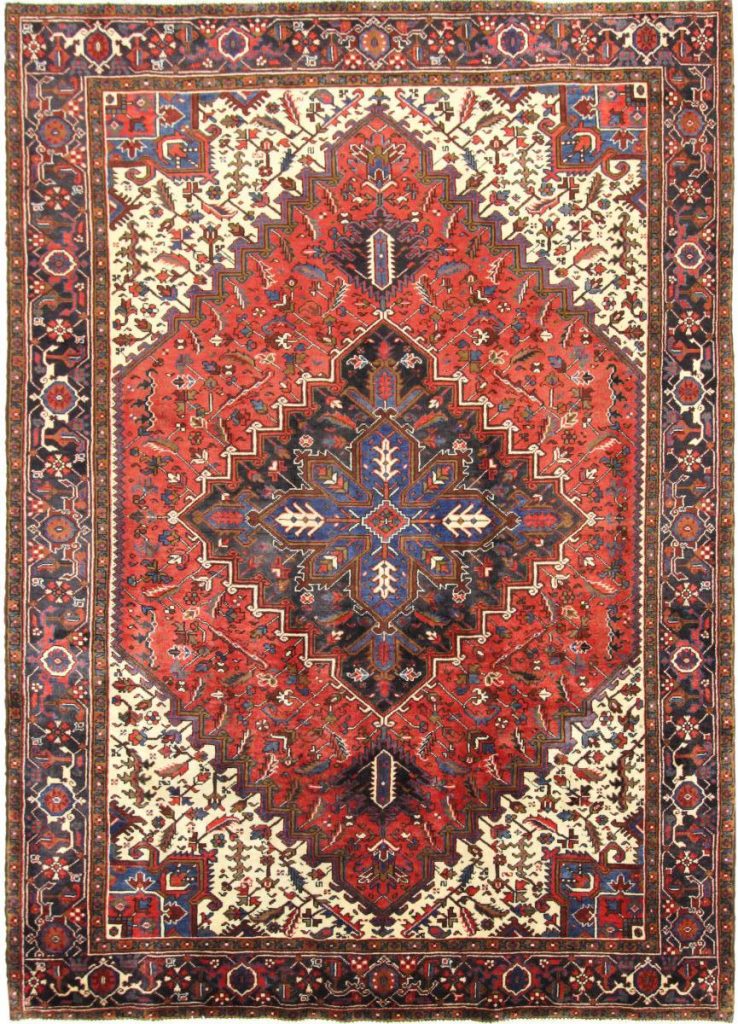
The result was a remarkable fusion: the sophisticated layouts of Persian court carpets translated into the bold, graphic language of the village weaver. This is the essence of a Heriz, a rustic, charming village Persian carpet with a richness and grandeur equal to the finest city pieces.
The influence of Tabriz on Heriz cannot be overstated. Tabriz, the capital of East Azerbaijan Province, is one of the oldest and most important rug-weaving centers in the world, with a tradition dating back to the 16th century.
Its weavers were renowned for their intricate, curvilinear floral designs. The impact of the Tabriz rug trade on Heriz is evident; the smooth, flowing medallions of Tabriz were adopted by Heriz weavers but reimagined with hard, geometric angles and broken contours. Today, Heriz carpets and rugs are a testament to this cross-pollination of ideas, a country version of the refined city styles that found their own unique identity.
The durability of a Heriz Persian carpet is legendary, earning it the affectionate nickname “the Iron Rug of Iran”. This toughness is not merely a result of skillful weaving but is also attributed to the unique geography of the Heriz region.
Mount Sabalan, near which the village of Heriz sits, is rich in copper deposits. It is believed that traces of this copper in the drinking water of local sheep produce a wool that is exceptionally resilient, far more so than wool from other areas. A single Heriz rug can take over 1,500 hours of artisanal handiwork, a testament to the dedication and skill of the weavers. This high-quality wool, combined with a robust, all-wool pile on a cotton foundation, creates a floor covering that can last for generations.
To understand the Heriz rug is to understand the Azari culture that produces it. The population of the Heriz region is of Azeri origin and speaks a Turkic dialect. The carpet-weaving traditions of this area are a fusion of the skills of these settled peoples and the nomadic Azerbaijani Shahsevan tribes who have historically roamed the region.
This cultural heritage is woven into every Heriz carpet. Weavers often create their designs from memory, telling stories of the past through traditional tribal shapes, patterns, and significant moments in the arts and history of Persia. The bold, geometric motifs are not just decorative; they are a visual language, a connection to a rich cultural identity that has been passed down through generations.
The broader context of Iran and Iranian culture is essential to appreciating the Persian carpet. The art of carpet weaving in Iran is believed to extend back to as early as 500 BCE. The Persian carpet is an inseparable item from Iranian art and culture, one of the most distinguished manifestations of the nation’s identity. It is a symbol of art and creativity, embodying a part of Iran’s authentic identity and acting as an ambassador of its rich history to the world.
The motifs and patterns of a Persian carpet of ten convey a message representing the current culture, history, and architecture of the time. In this grand tapestry of Iranian art, the Heriz holds a special place as a beloved and iconic village style.
Iran’s art and craftsmanship are world-renowned, and the Persian carpet stands at the pinnacle of this tradition. Iranian handicrafts are a rainbow of diversity, including the Persian Carpet, Minakari, miniature painting, Khatamkari, and Ghalamzani. However, it is the Persian carpet that has perhaps the greatest global recognition.
The exceptional craftsmanship involved in weaving these carpets has caught the attention of travelers and historians for centuries. The skills and techniques are passed down through generations, ensuring the survival of this ancient art form. When you look at a Heriz Persian carpet, you are seeing the culmination of centuries of Iranian craftsmanship, a piece of living history.
Tabriz, the cradle of traditional rug weaving in Iran, is also a celebrated center for Persian cuisine. Just as the city is renowned for its intricate carpets, it is equally famous for its culinary delights. Dishes like Kufteh Tabrizi, a giant, flavor-packed meatball, are central to the city’s cultural identity. The traditional foods, sweets, and nuts of Tabriz are a vital part of its heritage, each carrying stories of the past and the expertise of its cooks. In Tabriz, the art of the table and the art of the loom are two sides of the same cultural coin, both representing the rich, multifaceted nature of Iranian life.
This connection between the exquisite Heriz rug and the savory Kufteh Tabrizi illustrates the depth and richness of Iran’s cultural contributions.