
The Enduring Legacy of Zanjan: A Journey Through Persian Artistry
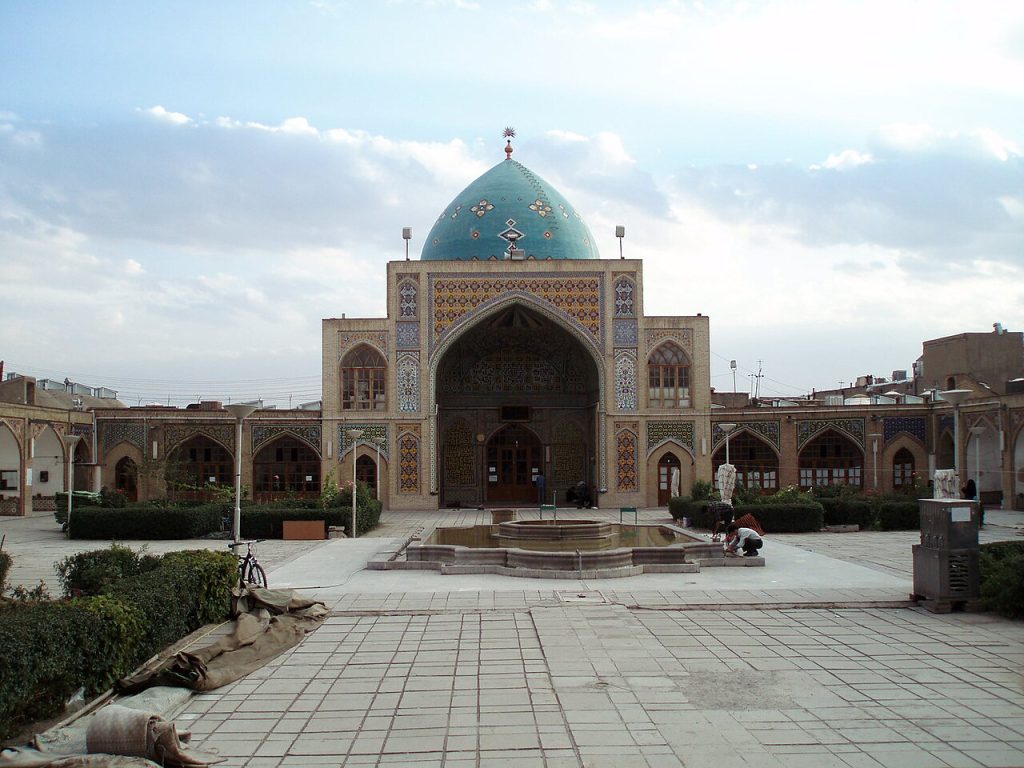
In the heart of northwestern Iran lies the historic city of Zanjan, a place where time-honored traditions and exceptional craftsmanship converge to create some of the most beautiful artifacts in the Persian world. Zanjan, with its rich cultural heritage and deep historical roots, stands as a testament to Iranian artistry.
The name Zanjan evokes images of skilled artisans and the vibrant, enduring spirit of Persian culture. This city and its province serve as a cradle for the traditional rug, a position that speaks volumes about its significance in Iran’s cultural landscape. For centuries, Zanjan has been a vital center where the ancient art of carpet weaving has been not only preserved but also innovated, making it a vital part of the narrative of Persian carpet history. This legacy ensures that each piece woven here is not just a floor covering but a narrative woven in wool and dye.
The Cultural Significance of Zanjan Province
Zanjan Province, with its capital city of the same name, is a region of immense historical and cultural importance in Iran. It is a place where the traditions of many Iranian ethnic groups, including the Shahsavan, Afshar, Tat, Kurdish, and Bakhtiari communities, have intermingled to create a unique and diverse cultural tapestry .
This cultural mosaic is most beautifully reflected in the region’s handcrafts. The province is celebrated as a hub for metal handicrafts, producing thousands of tons of copperware and silver filigree annually, and is famously designated as a World City of Filigree . Beyond metalwork, Zanjan is also renowned as the cradle of the traditional Persian knife, a craft with deep historical roots that continues to be a point of pride for the region . This combination of textile and metal artistry highlights the province’s central role in preserving and advancing Iran’s artistic heritage. The Zanjani culture is one of resilience, creativity, and profound respect for the skills passed down through generations.
Iranian Art, Craftsmanship, and the Persian Carpet
The art of the Persian carpet is an integral part of Iran’s cultural identity and history. With a legacy spanning nearly four millennia, the Persian carpet is more than a decorative item; it is a symbol of the Iranian people’s culture, spirit, and unparalleled creativity . Each knot tied and each pattern woven tells a story, often reflecting the history, nature, and everyday life of the region from which it originates . The craftsmanship involved is immense, often taking months or even years to complete a single piece using only the finest natural materials like hand-spun wool, silk, and cotton, dyed with extracts from plants and minerals .
This dedication to quality has earned Iranian carpets a prestigious place in museums and private collections worldwide . For the people of Zanjan, this ancient tradition is a living part of their daily lives, ensuring that the skills of their ancestors continue to thrive in the modern world.
A Masterpiece of Zanjani Tradition
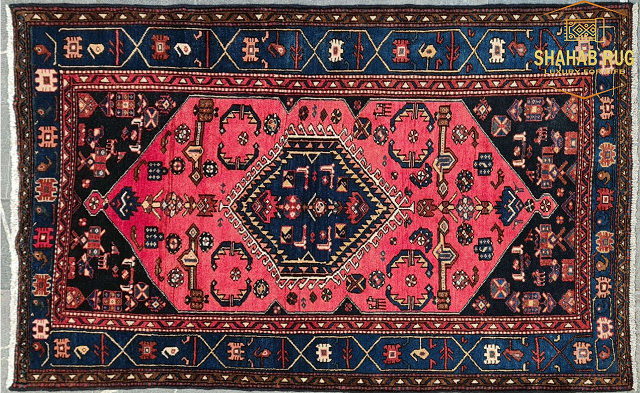
We are proud to present a stunning example of this rich tradition: a meticulously handcrafted Persian rug from Zanjan. With dimensions of 1.3 by 1.9 meters (approximately 4.3 by 6.2 feet), this rug is a perfect size to serve as a captivating centerpiece in any room, from a living area to an entryway. Its compact yet substantial size allows its intricate patterns to be fully appreciated.
The rug’s design is a testament to the bold geometric style for which Zanjan rugs are famous. It features a strong central medallion and corner design, known as Lachak-o-Toranj, a classic and symmetrical layout that provides a sense of balance and harmony . The primary colors are a rich, deep red and a profound navy blue, colors that form the vibrant backbone of many traditional pieces from the region . The weavers have masterfully employed a symmetrical design, creating a powerful visual impact.
The knots are tied by hand, a process that requires immense patience and precision, ensuring that this piece is both beautiful and durable, capable of lasting for generations .
The Rug’s Pattern and Artistry
What distinguishes a Zanjan rug from others is its powerful geometric clarity and visual precision . The patterns often incorporate repeating motifs, such as the Mahi (fish) motif, which is a common and cherished element in the region’s weaving tradition .
These motifs, arranged in straight, geometric patterns, are not simply decorative but are a form of visual storytelling, embodying the ancient Persia from which they originate . The art of weaving in Zanjan is performed without a draft, meaning the patterns come directly from the weaver’s mind, a skill passed down through generations of Zanjani artisans .
This unique characteristic ensures that no two rugs are exactly alike, each possessing a unique character and soul that reflects the personal artistry of its creator. The wool used is often hand-spun, giving the rug a natural softness, a characteristic shine, and remarkable durability .
The city of Zanjan and its surrounding villages are essential to the production of these magnificent works. In places like Zanjan, Tarom, and Abhar, the tradition of carpet weaving is a primary occupation for many villagers, a skill that supports families and keeps the cultural fabric of the community intact .
The weavers of Zanjan have honed their craft for centuries, creating rugs that are highly valued for their technical balance and durability. Owning one of these rugs means owning a piece of the rich cultural history of Zanjan, a tangible connection to the artistic spirit of Iran. This rug is not just an acquisition; it is an investment in a piece of living history, a celebration of the enduring artistic heritage of the city of Zanjan, and a testament to the skill of its people.
A Timeless Piece of Iran’s Soul
This Zanjan rug is more than a floor covering; it is a gateway to the rich history and vibrant culture of Iran. The Persian carpet is a silent language of the country’s culture, reflecting the elegance and creativity of its people . The patterns and colors within this rug echo the landscapes and traditions of Zanjan Province, from its majestic mountains to its bustling bazaars filled with the creations of master craftsmen. The very act of weaving a rug is a form of worship, a dedication to beauty and precision that is deeply ingrained in Iranian culture. The high knot density ensures that the detailed geometrical patterns are sharp and clear, a hallmark of high-quality, hand-knotted Persian rugs .